How to Know When Your Brakes Are Due for an Inspection
TLDR
- Most vehicles need a brake inspection every 12 months or 12,000 miles, but Northern Virginia's stop-and-go traffic and hilly terrain often shorten that window.
- A brake inspection checks pad thickness, rotor condition, calipers, brake lines, and fluid health without replacing anything unless a problem is found.
- Getting ahead of brake wear is faster and less expensive than waiting for a warning sign to show up.
Brakes are the most important safety system on your vehicle, yet most drivers only think about them when something has already gone wrong. A grinding sound or a soft pedal gets your attention fast, but by the time those signs appear, the wear is usually well underway.
Getting ahead of brake wear starts with understanding how often your brakes actually need to be inspected. The answer depends on more than just the calendar.
The Standard Interval and Why It Is Only a Starting Point
Most automotive manufacturers recommend a brake inspection every 12 months or 12,000 miles, whichever comes first. The Car Care Council aligns with this, recommending annual brake inspections for all passenger vehicles because many brake problems produce no noticeable symptoms until wear is already well advanced.
That said, the 12-month guideline was built around typical driving conditions. For most drivers in Chantilly, Sterling, and Great Falls, typical does not describe their daily commute.
What Northern Virginia Roads Do to Your Brakes
Stop-and-go traffic on the Dulles Toll Road, Route 7, and Route 50 generates far more braking cycles per mile than steady highway travel. Every slowdown, merge, and traffic signal adds heat and friction to your brake pads. Over tens of thousands of miles on these roads, that wear accumulates faster than the standard interval anticipates.
The rolling terrain around Great Falls and the density of school zones throughout Chantilly contribute as well. Northern Virginia winters add another layer of stress. Road salt and moisture from December through March can corrode brake hardware and accelerate rotor wear, even on vehicles that are driven carefully and kept in good condition.
For many of our customers who commute daily through Loudoun and Fairfax counties, we recommend a brake check every six months rather than waiting the full year. In more than 30 years of serving this community, we have seen the same pattern repeated: a vehicle comes in looking well-maintained, the driver has no complaints about how the brakes feel, and yet the inspection reveals pads at or below safe minimum thickness and rotors with heat-stress scoring that have been developing for months. Northern Virginia roads ask more of brake systems than standard maintenance intervals account for, and that gap is where wear quietly accumulates.
What Happens During a Brake Inspection
A brake inspection is a diagnostic, not a repair. No parts are replaced unless an issue is found.
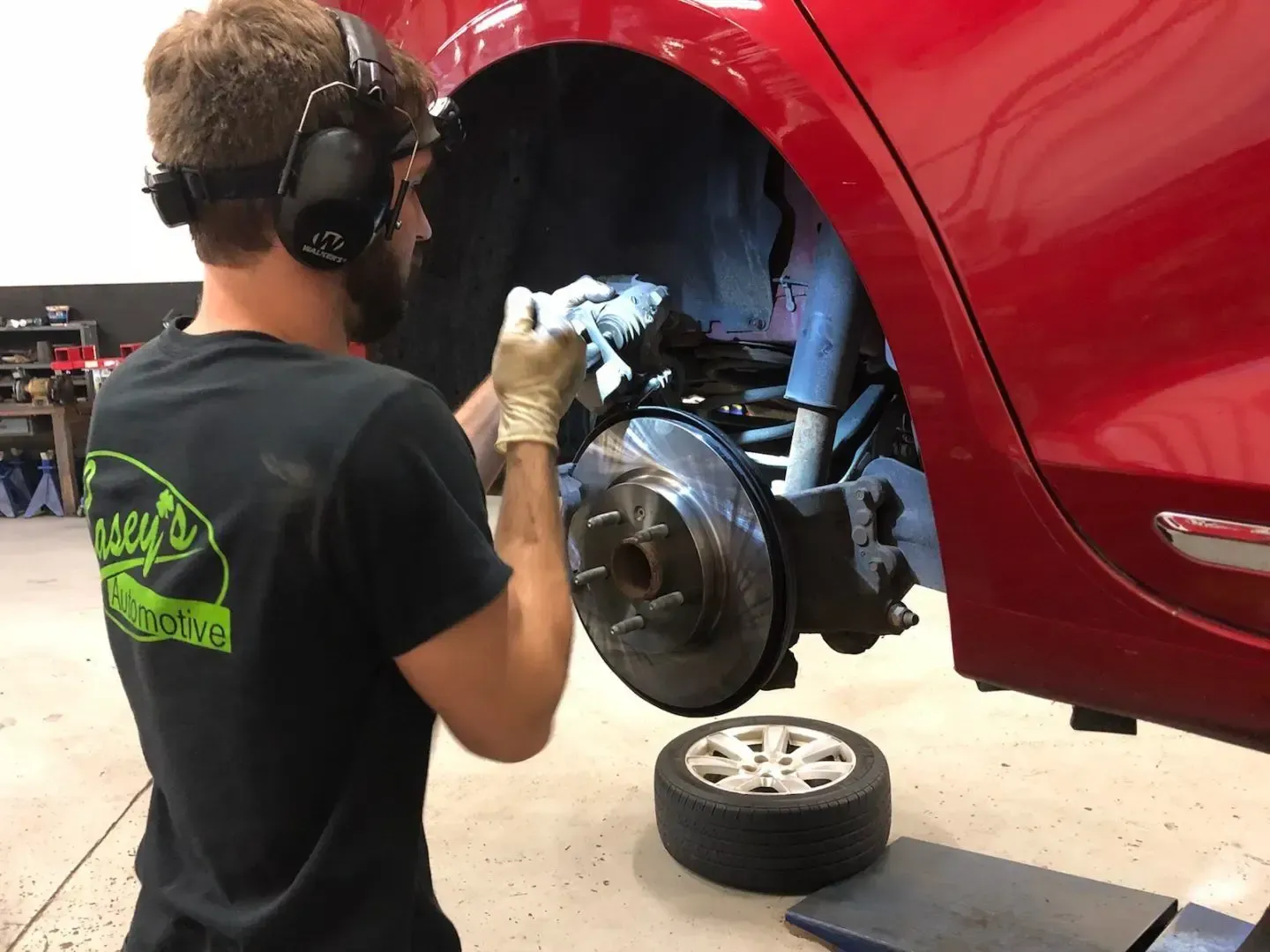
Our ASE-certified technicians evaluate each component of the braking system and document what they find. Brake pad thickness is measured against manufacturer minimums. Rotors are checked for wear grooves, heat scoring, and whether enough material remains to resurface or if replacement is the right call. Calipers are inspected for even pressure and any signs of fluid seepage. Brake lines and hoses are reviewed for corrosion or soft spots that could affect pressure. Brake fluid is tested for moisture contamination, which lowers the fluid's boiling point and reduces stopping consistency over time.
At all three of our locations, we perform courtesy digital vehicle inspections that include the brake system. You receive a full report with photos so you can see exactly what our technicians found, rather than relying on a verbal summary at the counter. Our technicians hold ASE certifications that require passing hands-on technical tests and accumulating verified work experience, with mandatory recertification every five years.
Signs You Should Not Wait for Your Scheduled Visit
The 12-month interval is a reasonable baseline for many vehicles, but certain situations call for a sooner inspection.
AAA recommends that drivers have their brakes inspected at least once a year, noting that many brake problems produce no warning the driver can detect on their own until wear is already well advanced. For Northern Virginia drivers putting in daily miles on stop-and-go roads, that annual baseline is a minimum, not a ceiling.
If your vehicle has been sitting for two or more months without regular use, surface rust can develop on the rotors even at low mileage. If you have recently done significant mountain driving, hauled heavy loads, or towed a trailer, the added thermal stress on the system warrants a check regardless of when you last came in. A hard impact from a large pothole or curb can affect brake hardware alignment without any visible damage from the outside.
Also pay attention to any change in how your brakes feel. A softer pedal, longer stopping distances, or slight vibration when braking are early indicators worth having checked before your next routine visit. These do not always point to something serious, but they are worth confirming sooner rather than later.
Fitting a Brake Inspection Into a Busy Schedule
One reason drivers delay brake inspections is convenience. Getting to a shop during the week, arranging a ride home, and working around a packed schedule is a real barrier for Northern Virginia families and commuters.
Casey's Concierge removes that obstacle entirely. Our team picks up your vehicle, completes the service at our shop, and returns it to you when finished. There is no extra charge for the pickup and return, and you never have to rearrange your day to stay on top of your vehicle's safety.
When you are ready to get ahead of brake wear, schedule a brake inspection at one of our convenient locations. We have been serving Northern Virginia families since 1993, and we back our work with an unlimited lifetime warranty on select parts.
FAQs
How long does a brake inspection take?
A standard brake inspection at Casey's Automotive typically takes 30 to 45 minutes. If we find something that needs attention, we will walk you through exactly what was found and what we recommend before any work begins.
Should I get my brakes inspected if they feel fine right now?
Yes. Many brake issues develop gradually and produce no noticeable symptoms until the wear is already significant. A visual inspection can reveal low pad thickness, early rotor scoring, or caliper wear that you would never detect from the driver's seat. Catching these early keeps repair costs lower and your vehicle safer on Northern Virginia roads.
Does Casey's Automotive charge for a brake inspection?
Our courtesy digital vehicle inspections, which cover the brake system among other components, are included with most service visits at all three of our Northern Virginia locations. For a standalone brake check, reach out to the location nearest you for current details.
Your brakes work hard every day on Northern Virginia roads, and a proactive inspection is the most effective way to stay ahead of costly repairs. Our ASE-certified technicians are ready to evaluate your brake system at any of our three locations in Chantilly, Sterling, and Great Falls. With more than 1,793 Google reviews and over 30 years of serving this community, Casey's Automotive has earned the trust of drivers across Loudoun and Fairfax counties. Reach out today to book a brake check, or let Casey's Concierge take care of the pickup and return for you.
Our Locations
719 Walker Rd, Great Falls, VA 22066
Hours: M-F 7:00 AM - 6:00 PM
Phone: (571) 786-8001
45891 Woodland Rd #130, Sterling, VA 20166
Hours: M-F 7:00 AM - 6:00 PM
Phone: (703) 444-6900
4260 Entre Ct # A, Chantilly, VA 20151
Hours: M-F 7:00 AM - 6:00 PM
Phone:
(703) 802-6300