Not Every Burning Brake Smell Is An Emergency (But Some Are)
TLDR
- A burning smell after a fresh brake pad installation is usually normal and clears up within the first few drives.
- Overheated rotors from heavy or prolonged braking produce a burning odor that signals a need to change your driving habits before damage sets in.
- A stuck caliper causes continuous friction and heat even when the pedal is not pressed, and it requires prompt attention.
That sharp, acrid smell drifting into your car after you press the brakes is hard to ignore. Most drivers recognize it as coming from the brakes, but knowing whether it is something to worry about takes a little more context.
The honest answer is that it depends on the cause. Some burning brake smells are completely normal and will resolve on their own. Others are an early warning you should not ignore. In more than three decades of brake service for drivers across Northern Virginia, we have seen all three of the main causes below, and knowing which one fits your situation can save you from a dangerous moment or an expensive repair down the road.
New Brake Pads Breaking In
If you recently had your brake pads replaced and the burning smell started soon after, this is almost certainly the most benign explanation on the list.
New brake pads go through a process called bedding in. The resin used to bind the friction material needs to cure under heat before the pad fully bonds to the rotor surface. During that curing process, you may notice a slight burning or chemical smell and possibly a small amount of light smoke rising from the wheels. It looks alarming. It is not.
This is especially common with semi-metallic and ceramic pads. The smell should taper off after the first three to five moderate stops or within a couple of drives at most.
What you should not notice alongside this smell is a grinding sound, a pull to one side, or a brake warning light. If any of those accompany the smell after a new brake job, come in and let our team take a look.
Overheated Rotors From Heavy Braking
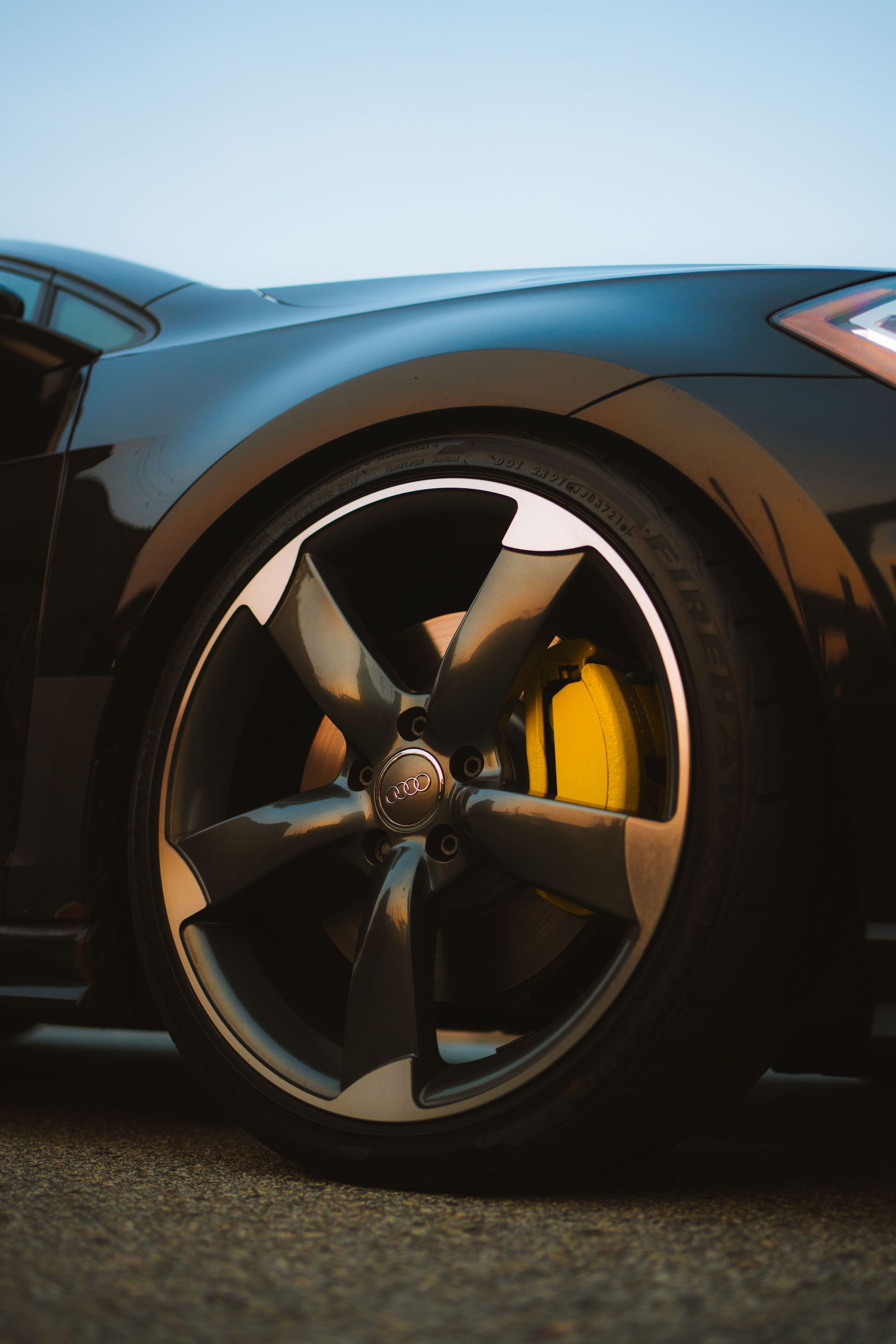
The second cause is more situational. If you just drove down a long hill, hauled a heavy load, or rode your brakes in extended stop-and-go traffic, your rotors may have exceeded their safe operating temperature. Rotors are engineered to dissipate heat, but they have limits. Push past them and you will notice a burning smell, sometimes quite strong, along with a faint shimmer of heat rising from the wheels.
The remedy is straightforward. Pull over somewhere safe, put the vehicle in park, and let the brakes cool for 15 to 20 minutes before continuing. Avoid setting the parking brake while the rotors are still hot, as this can cause uneven wear or warp the rear drums on some vehicles.
The deeper concern with overheating is what happens when it becomes a regular occurrence. Rotors that are routinely pushed beyond their temperature threshold can warp, crack, or develop hard spots, which show up later as pulsating under the pedal or vibration through the steering wheel. Chronic overheating is one of the leading contributors to premature rotor failure.
If you regularly drive routes with long descents, such as those heading west out of Loudoun and Fairfax counties toward the Blue Ridge, engine braking is a much better strategy than holding the pedal down for extended stretches.
A Stuck Caliper
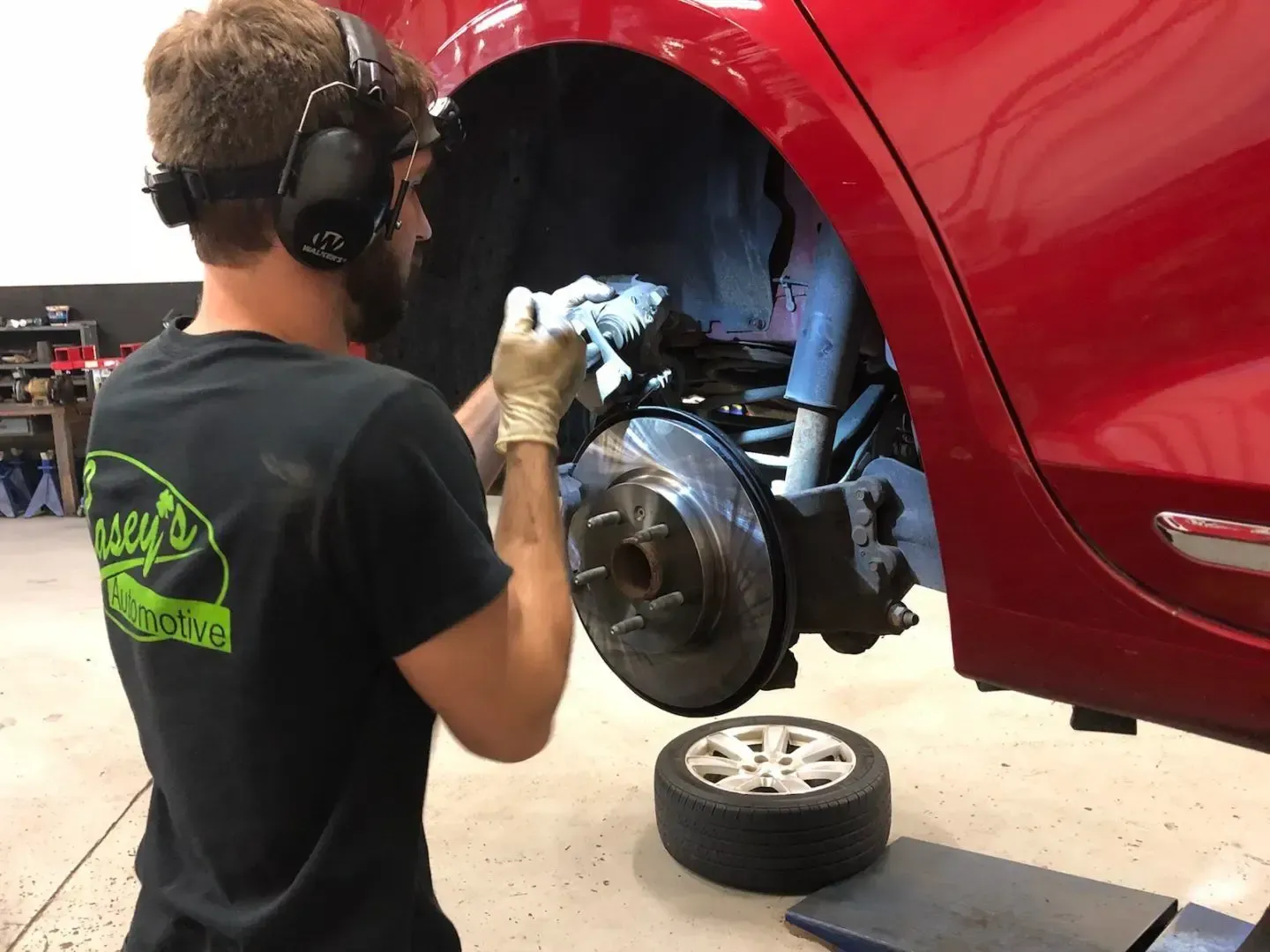
This is the cause that warrants the most urgency. A frozen or sticking caliper keeps constant pressure on the brake pads even when your foot is completely off the pedal. The pads grind against the rotor without rest, generating sustained heat and friction that does not let up. The smell tends to be stronger and more persistent than the other two causes. It often comes alongside other warning signs worth watching for.
The vehicle pulls noticeably to one side while driving. One wheel feels significantly hotter than the others after a short trip. A scraping or grinding sound grows worse the longer you drive. Fuel economy drops noticeably as the engine fights the constant drag.
The vehicles we worry about most are the ones that drove for several days with an intermittent burning smell before coming in. By the time they arrived, we were not just replacing the caliper. We were replacing the rotor and pads as well, parts and labor costs that a prompt inspection would have avoided entirely. In more than 30 years of doing this work across Chantilly, Sterling, and Great Falls, that pattern is one we see consistently.
A stuck caliper is not a wait-and-see situation. The sustained heat can damage your rotors, degrade your brake fluid, and in serious cases lead to brake fade at exactly the wrong moment. If these symptoms match what you are experiencing, the safest move is to pull over and call us rather than adding more miles to a compromised brake system.
Our Casey's Concierge service means we can come pick up your vehicle at no charge so you do not have to risk driving it in.
How To Tell Which Cause Applies To You
Running through a few quick questions usually narrows it down. Did the smell start right after new pads were installed? Bedding-in is the most likely explanation. Did it appear after a long downhill run or a heavy haul? Overheated rotors are the probable cause. Does the smell happen on ordinary drives and come with a pull to one side or a grinding noise? A stuck caliper should be at the top of your list.
If you are still unsure, a brake inspection is the fastest way to get a definitive answer. Whatever the cause, staying ahead of brake problems starts with consistent maintenance. Our guide on
understanding the importance of regular brake maintenance covers why routine care prevents most of the situations described in this post.
Our ASE-certified technicians hold the A5 Brakes certification from the National Institute for Automotive Service Excellence and can identify the source of a burning smell quickly and without guesswork. The Car Care Council recommends that drivers have their brake systems checked at least once a year, and brakes are also one of 24 required safety items on Virginia's mandatory annual vehicle inspection, administered by the Virginia State Police.
We have been serving drivers in Chantilly, Sterling, and Great Falls for more than 30 years, and we will give you a straight answer about what is going on and what it takes to fix it.
If the smell has you concerned, do not wait. Schedule a brake service at one of our shops. We back our brake work with an unlimited lifetime warranty on select parts, and our neighbors across Northern Virginia have trusted us with their vehicles since 1993. We have earned a 4.9-star rating across more than 1,400 Google reviews, and we intend to keep earning it one honest repair at a time.
FAQS
How long does the burning smell last after new brake pads are installed?
For most vehicles, the bedding-in smell from fresh pads fades within the first one to three drives after installation, usually after a handful of moderate stops that give the resin time to cure fully. If the smell lingers beyond the first week of regular driving, it is worth having a technician verify that the installation went as expected and that nothing else is contributing to the odor.
Is it safe to keep driving if my brakes smell like burning?
It depends on the cause. If the smell started right after a new brake job or following a long descent and there are no other symptoms, continuing to drive with some caution is generally acceptable. If the smell is constant, strong, and comes with a pull to one side, a grinding noise, or a wheel running noticeably hot, stop driving and have the vehicle inspected. A stuck caliper or severely overheated brake system can reduce your ability to stop when it matters most.
Can a stuck caliper fix itself?
No. A seized caliper will not free itself through normal driving. In some cases friction may temporarily shift the pressure on the rotor, but the root cause, usually a corroded slide pin or a failed caliper piston seal, will not resolve without a repair. The longer a stuck caliper goes unaddressed, the more damage it causes to the rotor and the pad, and potentially to the brake line as well. If you suspect a stuck caliper, have it looked at promptly.
That burning smell is your brake system telling you something. Whether it turns out to be minor or urgent, we are here to help you figure it out. Our team at Casey's Automotive has been diagnosing brake issues for Northern Virginia drivers since May 1993, and we stand behind every repair we make. Stop by or schedule online and let us put your mind at ease.
Our Locations
719 Walker Rd, Great Falls, VA 22066
Hours: M-F 7:00 AM - 6:00 PM
Phone: (571) 786-8001
45891 Woodland Rd #130, Sterling, VA 20166
Hours: M-F 7:00 AM - 6:00 PM
Phone: (703) 444-6900
4260 Entre Ct # A, Chantilly, VA 20151
Hours: M-F 7:00 AM - 6:00 PM
Phone:
(703) 802-6300